
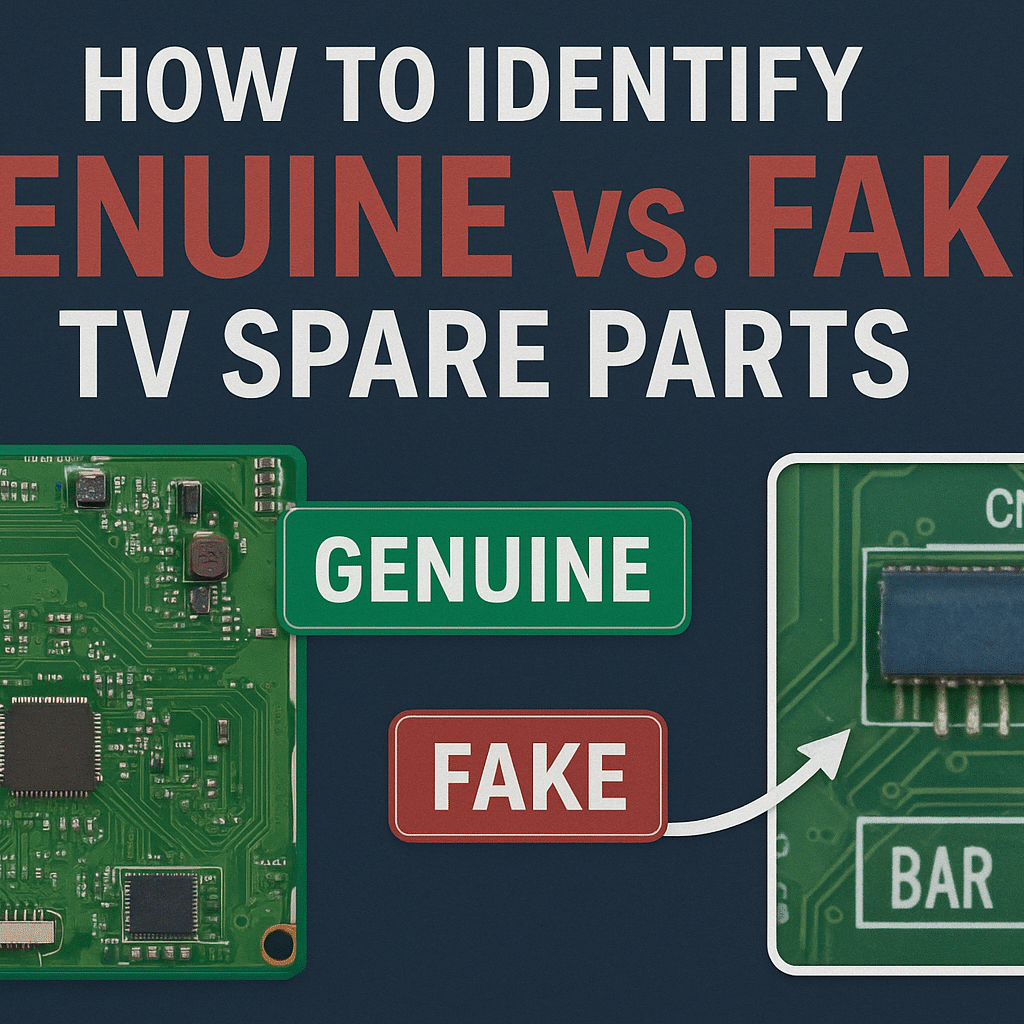
As LED TVs and smart displays become more advanced, the demand for high-quality spare parts has increased rapidly. Unfortunately, so has the market for fake, low-grade, and counterfeit TV components. These parts may look identical from the outside—but they can completely damage your TV, shorten its lifespan, and pose safety risks.
Whether you are a consumer, TV repair technician, or business buying parts in bulk, knowing how to identify genuine vs. fake spare parts is essential.
This guide breaks down everything you need to know to avoid costly mistakes.
Why Fake TV Spare Parts Are a Big Problem
Counterfeit parts are cheap for a reason:
- They use inferior materials
- They fail quality checks
- They don’t follow OEM standards
- They reduce panel life and may cause permanent damage
A TV repaired with fake spare parts may look fine initially but often develops issues like:
- Vertical lines on the display
- Sound but no picture
- Ghost images
- Overheating
- Slow performance
- Recurring failures
This ends up costing more in repeat repairs.
Key TV Spare Parts Most Commonly Counterfeited
- LED TV Panels (especially 32″, 43″, 55″, 65″)
- T-Con Boards
- Power Boards
- Mainboards / Motherboards
- COF (Chip-on-Film) / Tab Bonds
- Backlight Strips
- Wi-Fi Boards & Bluetooth Modules
- Speakers & Ribbon Cables
These parts require precision manufacturing — counterfeits rarely meet this standard.
How to Identify Genuine vs. Fake TV Spare Parts
1. Check the Serial Number & Part Code
Genuine spare parts always include:
- Original part number
- Batch code
- Serial number
- Manufacturer ID
Fake parts often have:
- Missing or incorrect numbers
- Stickers placed unevenly
- Codes that don’t match the TV model
Always cross-check with OEM part lists.
2. Inspect the Build Quality
A genuine part has:
- High-quality soldering
- Smooth PCB edges
- Clearly marked components
- Strong connectors
Fake parts usually show:
- Uneven solder
- Cheap plastic quality
- Missing screws
- Poor finishing
If it looks cheap, it usually is cheap.
3. Check Weight and Material Quality
Counterfeit parts often weigh less due to inferior materials.
Example: Genuine LED backlight strips are heavier because they use proper LEDs and metal backing.
4. Packaging Tells the Truth
Genuine packaging includes:
- Model number
- Part code
- Barcode
- Manufacturing date
- OEM branding
Fake parts come in:
- Plain polythene
- Unbranded cardboard
- Wrong spelling and poor-quality printing
5. Compare Connectors and Ports
Fake parts often have:
- Loose connectors
- Different pin structure
- Misaligned slots
These can cause short circuits and long-term damage.
6. Check Color, Texture & Finishing
Genuine PCB boards have:
- Uniform colour
- Sharp printing
- Quality components
Fake ones display:
- Patchy or faded PCB colour
- Poor printing quality
- Cheap components that heat quickly
7. Price Too Good to Be True? It Probably Is.
If someone offers a part for 40–70% cheaper than market price, it’s likely:
- Used
- Refurbished without disclosure
- Fake
- Damaged
Always buy from verified suppliers.
8. Buy Only from Trusted Vendors or Authorized Centers
This is the safest method.
Trusted vendors:
- Provide GST bill
- Offer warranty
- Source from OEMs or Tier-1 suppliers
- Have a return/replacement policy
At iTECHCARE, all spare parts go through:
- Multi-level inspection
- Compatibility checks
- Testing on actual TVs
- Warranty-backed assurance
9. Ask for Testing Before Purchase
Genuine suppliers will test:
- Panel backlight
- T-Con voltages
- Mainboard booting
- Power supply output
Fake sellers avoid testing because the part may fail immediately.
10. Verify COF (TAB Bond) Quality
COF strips are commonly faked.
Genuine COF:
- Has uniform alignment
- Uses high-grade bonding
- Works consistently under heat
Fake COF:
- Has off-centre alignment
- Heats up quickly
- Fails after few days, causing vertical lines
Red Flags That Indicate a Fake TV Spare Part
- No bill or warranty
- Extremely low price
- Seller refuses testing
- Generic labels
- Wrong part number
- Lightweight or flimsy build
- Sellers pushing “compatible” parts for every model
Why Using Fake Parts is Risky
Using counterfeit parts can result in:
- Permanent panel damage
- Short circuits
- Higher electricity usage
- Fire hazards
- TV not powering on
- Repeated failure and repair costs
It is always safer to use OEM or high-grade refurbished components from verified providers.
iTECHCARE’s Assurance: Only Verified, Tested, and Genuine Spare Parts
iTECHCARE ensures:
- 100% quality-checked spare parts
- Professional testing before dispatch
- Multi-point QC verification
- Standard warranty on eligible parts
- PAN-India delivery
- Expert support for compatibility
Whether you need motherboards, panels, power boards, T-Con boards, or LED backlights, we supply parts that meet industry standards.
Final Thoughts
With counterfeit parts rising in the market, identifying genuine TV spare parts is more important than ever. Always check labeling, finishing, testing, packaging, and seller credibility to avoid fake components.
For businesses, repair centres, and technicians, choosing genuine parts is not just about performance — it’s about safety, reliability, and long-term savings.